
A folded flag. A favorite pair of boots. A fishing photo pinned to the fridge. The details that stay with us are never generic — and neither should the artwork we choose to keep them alive. Learning how to choose memorial artwork starts with the real person: the role they played, the quirks that defined them, and the memories their family wants to hold close. The right piece does not need to say everything. It needs to say something true.
For a veteran, a military family, a proud parent, or anyone honoring a life well lived, memorial art can transform a wall, a shelf, or a quiet corner into a deliberate place of remembrance. It can carry service-branch pride, a personal motto, a beloved hobby, or simply a name that deserves to be seen every single day. The choices you make — size, symbol, color, wording — all shape whether the final piece feels like a tribute or just a print.
Start With the Story You Want the Artwork to Tell
Before you consider canvas size, color palette, or which quote feels right, decide what the artwork is actually honoring. A memorial can focus on military service, but it can also celebrate who someone was at home: the dad with the enormous laugh, the Navy veteran who never missed a grandkid’s game, the mom who held the whole family together, the friend who made every room lighter without trying. Service is one chapter. A life is the whole book.
Ask one grounding question: What would someone who knew them instantly recognize? The answer might be a branch emblem, a unit patch, a motorcycle, a dog, a favorite phrase, a landscape they loved, or even a signature color they wore every week. That personal anchor is what gives a design its heart — and what separates memorial art from generic wall decor.
If the person served, military imagery carries real weight when it is specific and accurate. The US Army, US Marines, US Navy, US Air Force, Coast Guard, and Space Force each have distinct traditions, visual language, and cultural identity. Before anything is finalized, confirm the branch, rank, unit details, dates, medals, and spelling with a trusted family member. A small detail, handled correctly, shows enormous respect. Handled carelessly, it can feel like a stranger wrote the tribute. You can also explore branch pride apparel and design language by branch to get a feel for what visual traditions mean across the services.
How to Choose Memorial Artwork for the Right Setting
Where a piece lives should shape what you choose. Artwork created for a formal memorial service has entirely different requirements than a gift for a spouse’s living room or a keepsake that several family members will each bring into their own homes.
A larger canvas or framed print creates a strong focal point — above a mantel, in an entryway, or in a dedicated remembrance space. A smaller print may feel more intimate on a bedside table, a desk, or as part of a gallery wall. Ornaments and compact keepsakes work well when family members want a shared tribute they can each display personally. According to the U.S. Department of Veterans Affairs, honoring a veteran’s service through visible, lasting tributes supports both individual grief and community remembrance.
Think about viewing distance, too. Fine text and small design details disappear across a room. If the piece includes a name, dates, a rank, or a meaningful phrase, confirm it remains readable at the chosen size. The strongest designs tend to deliver a clear primary message at a glance, then reward a closer look with personal detail.
Setting also determines mood. A patriotic home may call for bold red, white, and blue — a flag-inspired background or a branch-forward design. A quieter living space may suit muted neutrals, nature imagery, or a clean black-and-white treatment. Neither approach is more meaningful. It depends entirely on the person being honored and the people who will live with the piece every day. For more ideas on placement and atmosphere, the guide to decorating patriotic walls with real purpose covers setting-based decisions in useful depth.
Popular in Canvas & Posters

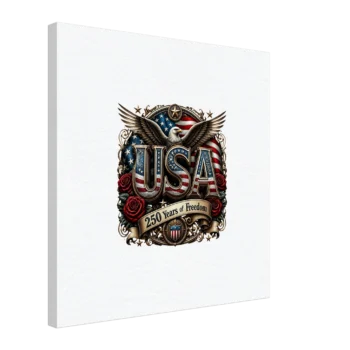

🇺🇸 Printed & shipped by US partners | Fast 3–5 day delivery
🔒 Secure checkout | ↩️ Easy returns & refunds
Designed for those who wear their story with pride.
Choose Symbols With Real Meaning
The strongest memorial artwork relies on a few intentional symbols rather than trying to pack every chapter of a life into one design. Crowded art loses its emotional impact — and often its readability.
Start with one primary symbol, then add one or two supporting details. A Marine memorial might feature the Eagle, Globe, and Anchor alongside a name and years of service. A tribute for an Army veteran might pair a subdued flag element with a personal phrase that only their family would recognize. A memorial for a military spouse could honor both the loved one’s service and the strength the spouse carried at home for years — because that story deserves visibility too. If you’re gifting to that audience specifically, the guide on what military wives actually want from a tribute is worth reading before you decide.
Meaningful symbols often come from beyond military service. A lake for a lifelong angler. A classic car for a weekend mechanic. A sunflower for a grandmother who grew them every summer. Playing cards for a larger-than-life storyteller. A cross for a faith-centered life. These details remind people that a life was more than one title — even when that title was deeply, honorably earned.
Be thoughtful with emotionally intense imagery. Some families find battlefield silhouettes, solemn memorial poses, or heavy ceremonial language comforting. Others want something that feels warm, proud, and alive — a tribute that reflects how the person lived, not only how they are missed. Psychology Today’s research on grief consistently shows that personalized, meaning-rich memorials support healthier long-term processing than generic ones. Memorial artwork should reflect the family’s actual relationship with loss — not an outside idea of what grief is supposed to look like.
For inspiration on how canvas and poster formats handle these symbolic choices differently, the comparison of posters versus canvas prints breaks down the practical and aesthetic differences clearly.
Get the Words Right
Words give memorial art its voice. For some families, a name and two dates are enough — the image carries everything else. For others, a short phrase becomes the emotional center of the whole piece.
The most effective wording is usually direct. A service motto, a familiar saying, a line the person repeated often, or something as clean as “Forever in Our Hearts” can carry more weight than a full paragraph of sentiment. If you use a military phrase or branch motto, verify its exact wording and context before it goes on anything permanent. Precision is a form of respect.
When selecting a quote, read it aloud. Does it sound like them? Would their family hear their spirit in it? If the answer is no, keep looking. You are not writing the most impressive tribute — you are preserving the most honest one. That distinction matters more than most people realize until they see the finished piece.
For gifts, consider whether the recipient values private remembrance or public pride. A spouse may want a full design — name, rank, dates, branch insignia — displayed with intention. A close friend might prefer a quieter print centered on a single shared memory. Personal does not always mean more text. Sometimes it means better-chosen text.
Balance Pride With Comfort
Memorial artwork can be bold without being overwhelming — and that balance matters when the piece is meant for a home rather than a ceremony. A strong patriotic design feels exactly right for some families. Others want something calm and understated, a tribute that blends naturally into their living space without demanding emotional attention every time someone walks past.
Color does much of the emotional work. Deep navy, black, charcoal, and muted green feel grounded and military-rooted. Red, white, and blue communicates patriotic pride without explanation. Warm earth tones and open sky imagery often feel peaceful and lasting. Black and white gives a timeless quality, though a single touch of color — a unit patch, a flower, a flag detail — can restore the energy of the person rather than only the solemnity of the loss.
Consider the balance between photo-based and illustrated art as well. A strong photograph feels deeply personal, especially one that captures a real expression or a meaningful setting. Illustrated designs offer more flexibility for layering text, symbols, and themes into a single cohesive composition. If the only available photograph is low resolution, a stylized treatment is almost always more respectful than enlarging a blurry image to canvas size. The guide on whether wall art can be a meaningful gift explores this photo-versus-illustration question with practical context.
Make It a Gift That Respects the Moment
When you are choosing memorial art for someone else, timing and tone matter as much as the design itself. A gift does not have to arrive immediately after a loss to land with meaning. Anniversaries, birthdays, Veterans Day, Memorial Day, and milestone moments can all be quietly difficult days — and a thoughtful tribute arriving then says something words often can’t: their story is still remembered here.
If you are unsure of the right design, resist the urge to guess at personal details. Ask discreetly about the branch, favorite colors, hobbies, preferred photograph, or whether the family leans toward religious or patriotic elements. One careful question produces a far better result than a tribute built on an assumption. For more context on getting branch-specific gifts right, the comparison of Army gifts versus Navy gifts and what makes each feel personal is a practical starting point.
MissionShop’s military canvas prints and patriotic posters are designed for people who want to display their story — or someone else’s — with purpose. These are not decorations for decoration’s sake. They are reminders of service, love, identity, and legacy, made to carry that weight every day they hang on a wall.
Give Yourself Permission to Keep It Simple
There is no perfect formula for remembrance. Some of the most powerful memorial pieces include only a name, a date, and one symbol that says everything else without trying. Others hold a photograph, a full service tribute, a favorite quote, and an entire life inside one frame. Both approaches work. The only version that fails is the one that feels borrowed — designed for someone else’s story, not this one.
Choose the piece that feels honest when you look at it. The best memorial art does not ask people to move on. It gives them a lasting way to look back with pride, with love, and with real gratitude for what that person built. If you want more guidance on finding a tribute that fits the full picture, the guide on military gifts that carry real pride and meaning covers the broader gifting landscape with the same honesty this decision deserves.
Frequently Asked Questions
Where are MissionShop canvas prints and posters printed?
All products are printed and shipped by US-based partners, so you can trust the quality and the timeline.
How fast will my memorial artwork arrive?
Most orders are delivered within 3–5 days, making MissionShop a reliable option even when timing is important.
What if the artwork doesn't meet my expectations?
MissionShop offers easy returns and refunds so your purchase is protected.
Is checkout secure on MissionShop?
Yes. MissionShop uses secure checkout to protect your payment and personal information every step of the way.



Leave a Reply